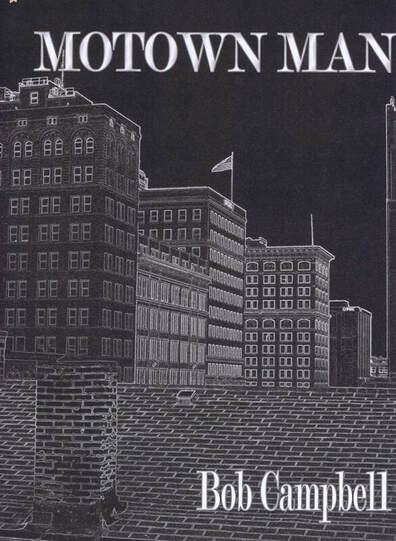
 Although not a story about music, a variety of songs – opera, jazz, rock, blues, R&B, rap/hip-hop, pop – are referenced and figure into MOTOWN MAN’s setting.
Hence, the free MOTOWN MAN playlist: (*Courtesy of YouTube)
0 Comments
 Bring your lunch and hear Bob Campbell the author of Motown Man as well as numerous non-fiction essays for Belt Magazine, Gravel Magazine and Forge Literary Magazine. A former newspaper reporter Bob is a native of Flint. He is the 2022-2023 Writer in Residence at the Buckham Fine Arts Project and manager of Marketing and Communications at Mott Community College.
Flint Public Library Harris RoomThursday, February 9, 2023 12:00pm - 1:00pm www.fpl.info/event/booked-lunch-bob-campbell Reading Chevy in the Hole, the debut novel by Flint-native Kelsey Ronan, a question continued to nag me: What did Monae see in August that would allow such a relationship to take root?
He’s a nerdy, recovering drug addict who nearly died after overdosing in the bathroom of a Detroit farm-to-table restaurant and returned to his hometown of Flint to restart his life. She’s a senior “at the university” (UM-Flint, presumably) majoring in environmental science, volunteering at an urban farm in one of Flint’s many depleted neighborhoods and employed at Sloan Museum (the museum isn’t identified by name). He’s also a habitual cigarette-smoker who crashes on his sister’s couch, doesn’t give a damn about much of anything, and is “pretty sure” Flint owes him something. Meanwhile, she’s motivated “to know why kids get fat on the free lunch program and the junk food their mothers buy at gas stations because they’ve got to take two buses to get to a supermarket.” Oh, and then there’s this: In one of the nation’s most segregated communities and one with a checkered past and present on matters of race, he’s a 26-year-old white man and she’s a 22-year-old Black woman. READ MORE  "Motown Man", the debut novel by Flint author Bob Campbell, is now available as an audiobook.
Campbell teamed up with the renowned voiceover artist Greg Campbell for the audio production of the novel that book critics have called a “thought-provoking,” “sensitive and honest portrayal of ethnic and racial diversity within Flint and the country,” and “a perfect book … at this point in history.” Although the author and voice actor share the same last name, the two are not related. But they did grow up together in the same southside Flint neighborhood, with the author just a year older than the novel’s narrator. Published in November 2020 by Urban Farmhouse Press (Windsor, ON), "Motown Man" is the story of Abby and Bradley, an interracial couple who are set on building a life together in a faded factory town rife with veiled racial tension, marked uncertainty and on the edge of losing its identity in the early 1990s. But to Bradley’s younger brother, James, their relationship is a fool’s errand. The novel’s setting “could be Anytown, USA,” according to a review in East Village Magazine.  Martha Yates Jones (left) and Pinkie Yates (right), daughters of Rev. Jack Yates, in a decorated carriage parked in front of the Antioch Baptist Church located in Houston's Fourth Ward, 1908 (Credit: The African American Library at The Gregory School, Houston Public Library 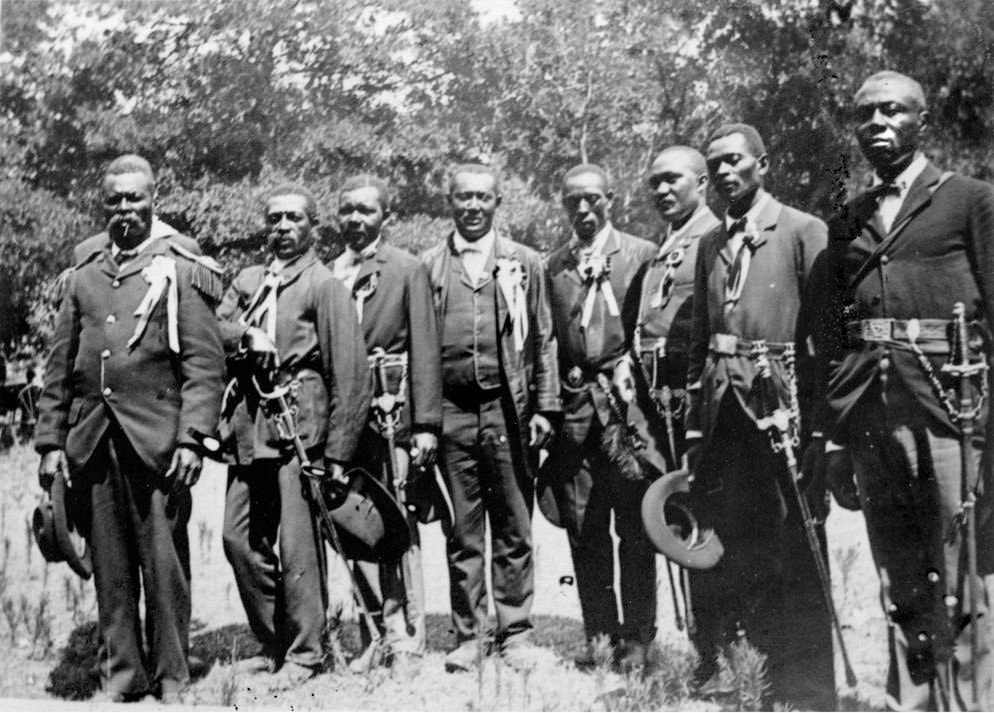 Group of men in Civil War uniforms, likely for a re-enactment of the Union’s entry into Galveston. Photograph by Grace Murray Stephenson of Juneteenth celebrations in Eastwoods Park, Austin, 1900. (Credit: Austin History Center PICA 05484B) Group of men in Civil War uniforms, likely for a re-enactment of the Union’s entry into Galveston. Photograph by Grace Murray Stephenson of Juneteenth celebrations in Eastwoods Park, Austin, 1900. (Credit: Austin History Center PICA 05484B) Juneteenth is not a gift. Juneteenth is earned. Juneteenth is recognition. Juneteenth is determination. Juneteenth embraces the souls of Black folk. Juneteenth honors our blues and jazz, and the spirit of Jimi Hendrix, too. Juneteenth is Cassius Clay’s metamorphosis into Muhammad Ali. Juneteenth voices our collective, unyielding humanity. Juneteenth reminds us, in the words of Tony Award-winning actor André De Shields, that the top of one mountain is the bottom of the next. (“So keep climbing,” De Shields says.) Juneteenth tells us that we ain’t really free ‘til all of us ‘n nem is free. Juneteenth is an Independence Day-Memorial Day* – two of our most sacred holidays – remix. “Black people created what we might call freedom in America today,” wrote history scholar Daina Ramey Berry, in her essay The Truth About Black Freedom. “That is the story we celebrate and uplift on this holiday.” So, remember Juneteenth. Always. (c) Bob Campbell/bobcampbellwrites.com *The first-known Memorial Day commemoration was organized by a group of Black people freed from enslavement a month after the Confederacy surrendered in 1865, according to Pulitzer Prize-winning historian David W. Blight. Excerpt from The First Decoration Day:
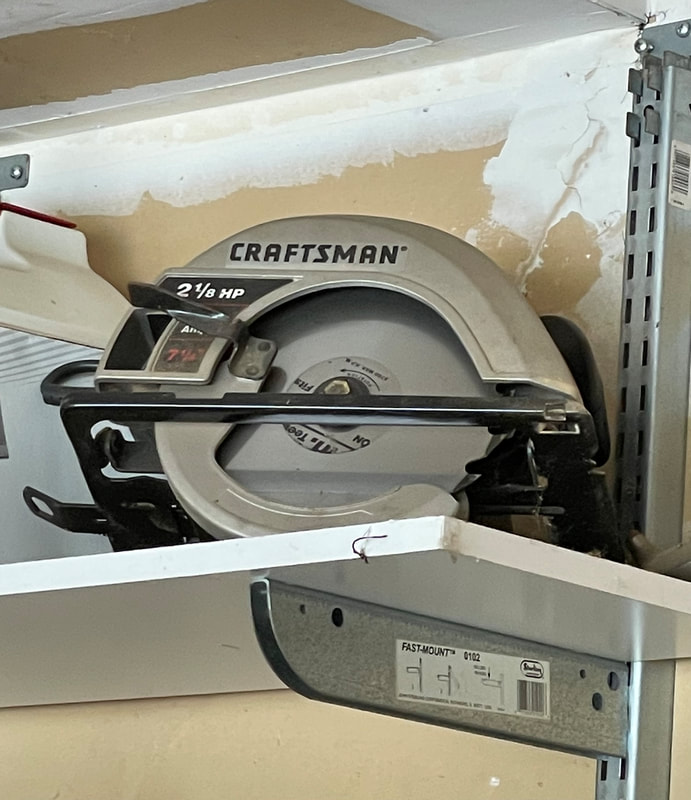 A gift from my father, given to me not long after Wanda and I moved into our current home; stored on the top shelf in my garage. Loud. Powerful. Capable. A Craftsman. This circular saw has been especially useful over the years. Of course, I haven’t given this tool -- nor the one he owned prior -- nearly the workout that my father did in the years before he bequeathed it to me. But from sawing the lumber I used to build Jonathan’s playset to installing laminate wood flooring in a bedroom to odd repair jobs and school projects, it’s been there for me whenever I needed it. Just like he was. Happy Father's Day, Big Guy.
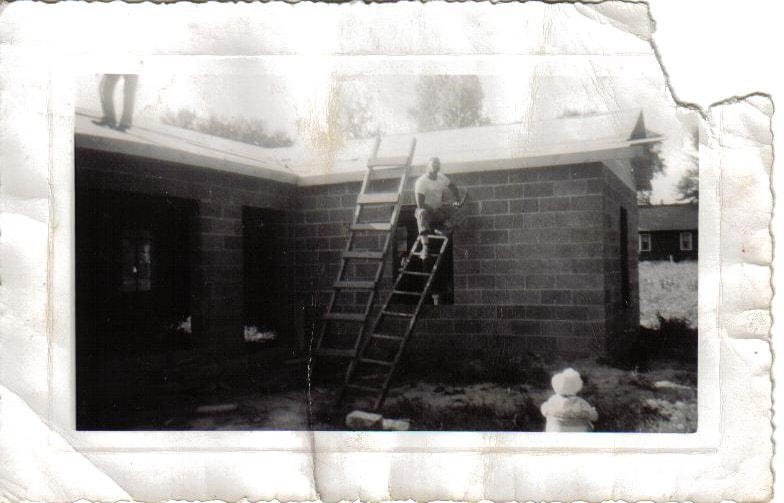
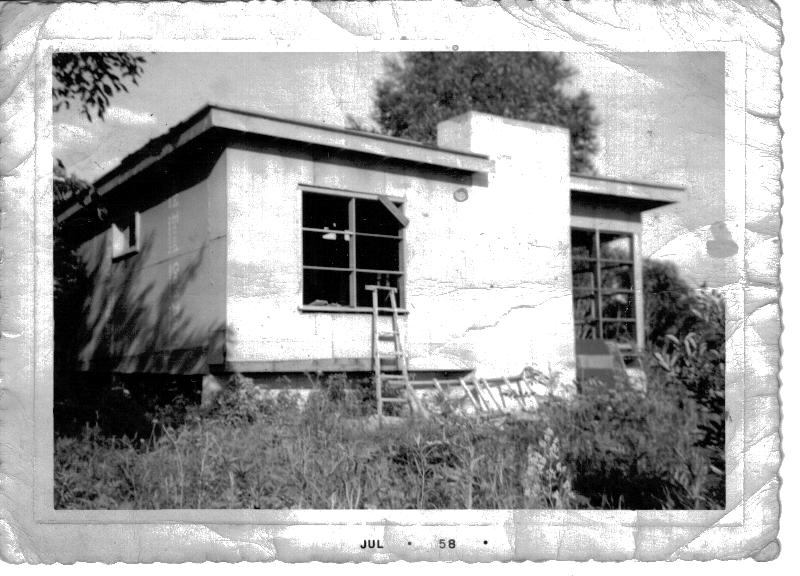 The family cottage he built at Shay Lake under construction in 1958. 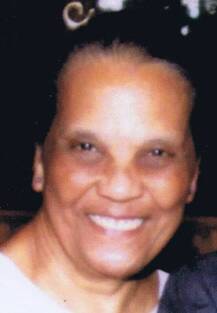 Your homemade fudge and brownies. Horsey rides on your lap, with me as the cowboy being chased by a band of Indians, played by you. Roller skating in the house with us “beetle bums,” well, that is until you slipped one day and cracked your elbow on our concrete tiled floor. Racing down the hill from the car to the cottage at the lake. Haircuts in the kitchen. And how could I ever forget the time you tried to style my hair like Duke Ellington’s? (Thanks, mom. The fellas on the block really liked that look.) Your scoldings that could go on and on … and on, leaving me with nothing else to say but “Okayyy, ma.” Listening to you play the piano, except when the Three Stooges were on or Bugs Bunny or pretty much any other time the TV was on. The way you subtly bopped your head whenever you heard a nice jazzy tune. That way you called new, cool and stylish things “snazzy.” The way you cared for Daddy and Madeline all those years. Your authentic grace and compassion. Your laughter and goofy sense of humor. And the time I sought your advice to a real conundrum, you responded not with a suggestion as much as it was a directive: “Well, whatever you decide, you be nice because Wanda’s a very a sweet girl.” The first time you held Jonathan and that look on your face. “There’s my baby,” you said. I have just one question: What did I ever do to deserve a mother like you? Happy Mother’s Day. 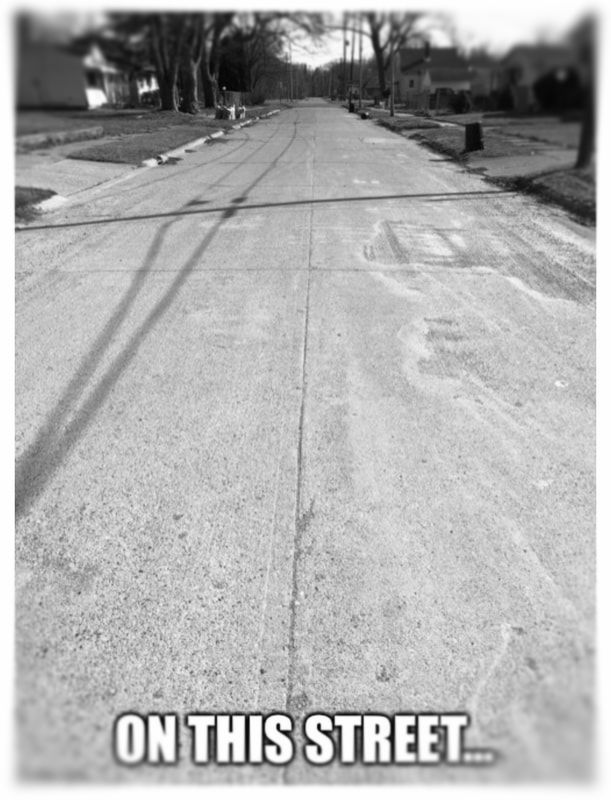 How many games of touch football were played on this street?
How many first downs reached? How many passes picked off? How many touchdowns scored? How many games of kickball and four square? How many races run, and ropes jumped? How many activities paused, momentarily, to allow a car to pass? How many drivers asked to park in the driveway or a little ways up? How many bicycles raced? How many wheelies done? How many knees skinned, and elbows bruised on this street? How many dukes put up to settle scores before things were cool again later that afternoon or the next day? How many fat lips traded among friends? How many straw boat races held during the spring thaw, or after a heavy rain, in the gutters along the curb? How many kids with fistfuls of nickels and dimes and quarters scrambled to catch the ice cream boy after being lured by the jingle-jangling bells on his three-wheeled ice box? How many stops did the milkman make? How many footfalls trampled the pavement, as kids stampeded home from the elementary school just up the block? How many brown, withered leaves, from bygone silver maples and elms that once shaded it all summer long, settled here before being cleared away? How many memories were made on this street? More than they’ll ever be, ever again? (c) Bob Campbell/bobcampbellwrites.com 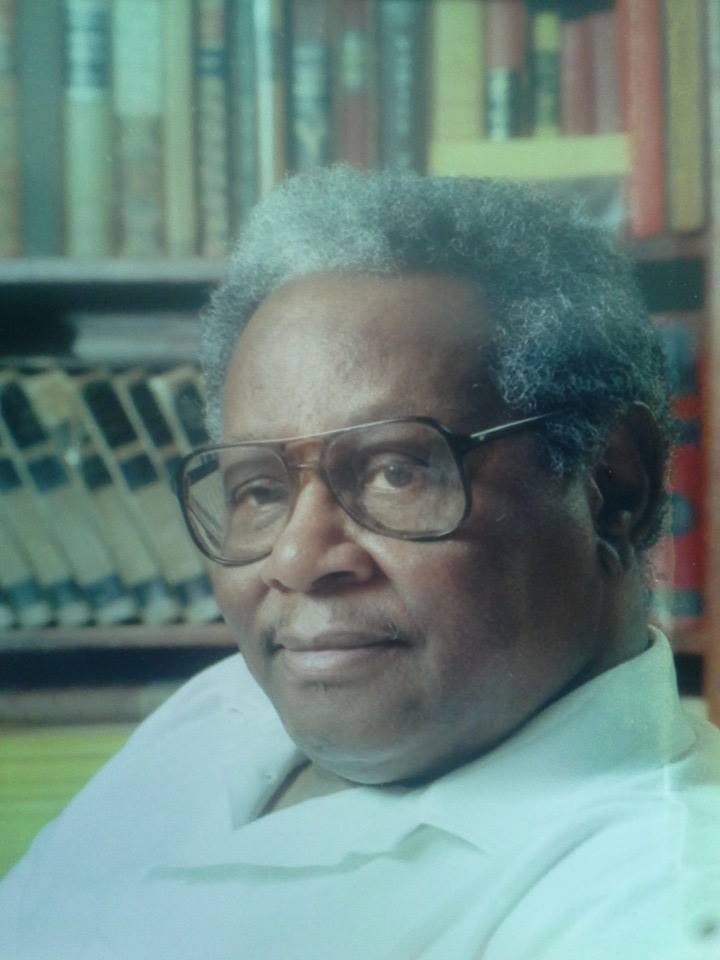 Clarence C. Campbell, Sr. (see video at the bottom) Clarence C. Campbell, Sr. (see video at the bottom) This man was born 100 years ago today. The world has never been the same.
Georgia-born, he became a child refugee in the Great Migration when his father moved their small family north to Michigan where the father went to work for a booming automaker in a rising place called Flint. He was a boy during the Great Depression and, years later, was working as a janitor at AC Spark Plug when the Japanese bombed Pearl Harbor. In December 1942, he kissed his young bride goodbye and marched off to war in Europe. After combat training in Fort Huachuca in the Arizona desert, he eventually went ashore overseas somewhere in Leghorn, Italy, with elements of the 92nd Division, the all-black combat unit in Uncle Sam's segregated Army. There, his division, part of the Fifth Army, fought its way up the Ligurian Coast and into the Northern Apennines and Italian Alps smashing German Nazis. When Italy's fascist dictator Benito Mussolini was captured, executed by Italian partisans and his corpse hung in a public square in Milan, he was just 20-25 miles away. |
AuthorBob Campbell, an essayist and novelist, likes his bourbon neat. His debut novel, Motown Man, was published by Urban Farmhouse Press in November 2020. Archives
February 2023
Categories |

 RSS Feed